What Is Hierapolis?
Hierapolis ("Holy City") was founded as a Greco-Roman thermal spa city in the 2nd century BC, built directly above Pamukkale's hot springs. For centuries, people traveled here to bathe in the healing thermal waters — making it one of the ancient world's most popular spa destinations.
Today, the ruins sprawl across the hilltop above the travertines and are included in the same ticket. Many visitors focus only on the travertines and miss Hierapolis, which is a mistake — the ruins are extensive and impressive.
Top Things to See
The Theater
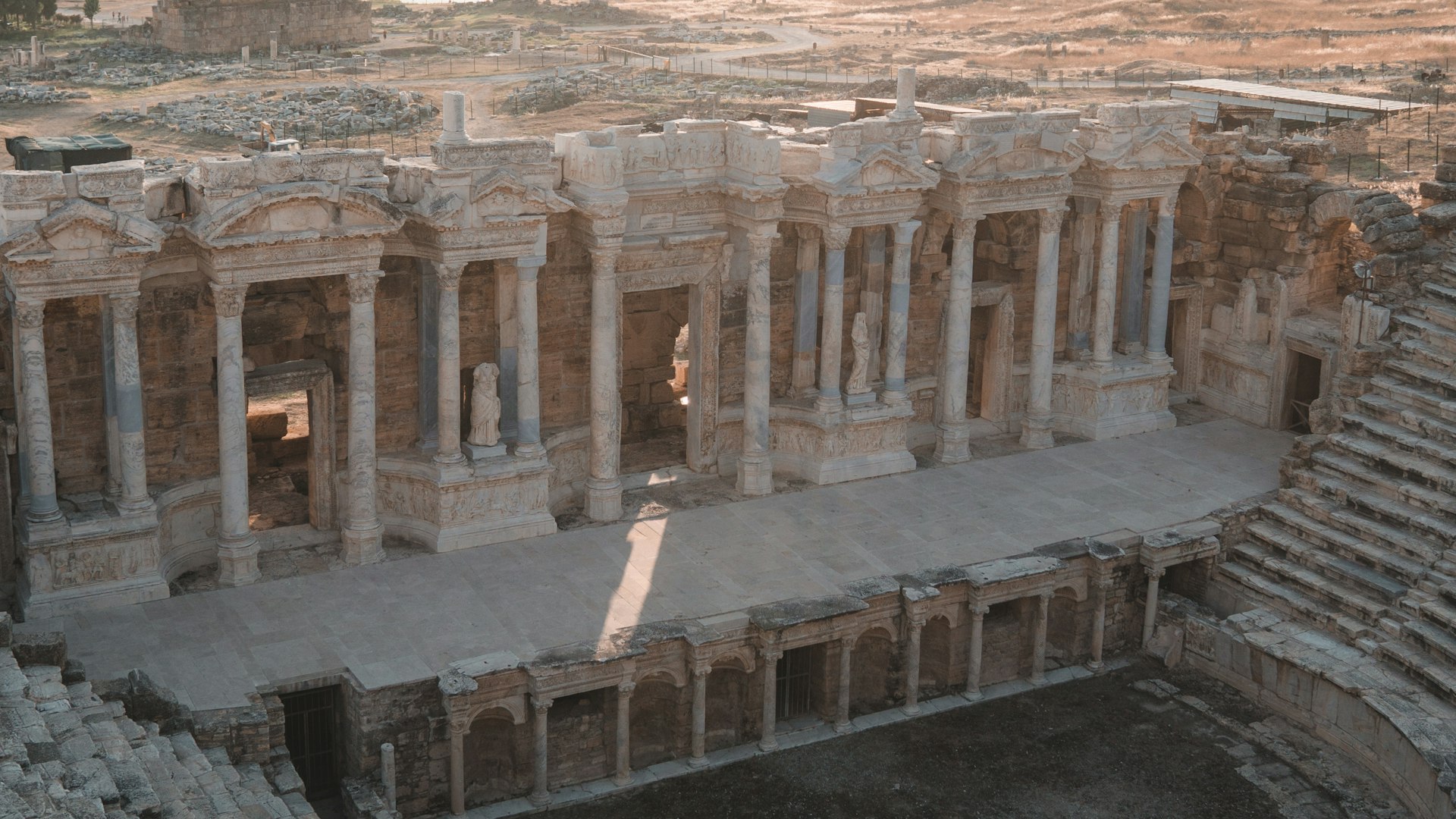
Hierapolis's highlight — a beautifully preserved 12,000-seat theater carved into the hillside with panoramic valley views. The stage building features detailed reliefs of mythological scenes. The acoustics are excellent. This is one of the best-preserved ancient theaters in Turkey, rivaling Aspendos.
The Necropolis
One of the largest ancient cemeteries in the world — over 1,200 tombs stretching along the road north of the city. Elaborate sarcophagi, tumuli, and house-type tombs from the Hellenistic, Roman, and early Christian periods. The scale is remarkable and the setting is atmospheric.
Frontinus Gate
The monumental entrance gate to the city — a triple-arched structure flanked by towers. Well-preserved and impressive.
The Martyrium of St. Philip
An octagonal church on the hillside, traditionally associated with the apostle Philip who is said to have been martyred here. Partially excavated with atmospheric views.
Hierapolis Archaeological Museum
Housed in the restored Roman baths, this small museum displays sarcophagi, statues, and artifacts from the site. Worth a quick visit (30 minutes). Separate small fee.
The Plutonium
A small cave below the Temple of Apollo that emits toxic carbon dioxide gas. In ancient times, priests demonstrated its deadly power by leading animals into the cave. The gas is still active — stay behind the barriers.
Walking Route
Recommended sequence (2–3 hours total):
- Walk up the travertines from the south entrance (30–60 min)
- At the top, turn left toward the Cleopatra Pool area
- Continue to the theater (15-minute walk uphill)
- Walk north along the main colonnaded street
- Pass Frontinus Gate and continue to the necropolis
- Return via the same route or exit at the north entrance
Distance: The full site spans about 2.5 km from south to north. Most visitors see the theater and immediate surroundings (about 1 km of walking).
Practical Tips
- Wear shoes — Unlike the travertines, Hierapolis is a normal archaeological site. Bring shoes back on when you reach the top.
- Sun & water — Very little shade. Bring water and sun protection.
- Time management — If energy is limited, prioritize the theater (best view) and a quick walk past the main street.
- Best light — The theater faces south, so morning light is best for photography.